It appears the stage has been set for a rather turbulent summer in travel: from new EU border rules to the impact of the Iran war on flight prices, everything is in constant flux.
Not only can travellers expect chaos when it comes to air travel, but higher prices are to be anticipated too.
Holidaymakers are being warned about additional expenses they could face when travelling abroad this year, as key taxes and travel essentials look set to soar.
Travellers are also being urged to check the terms and conditions before booking, as some package holidays allow companies to increase prices by up to eight per cent due to changes in fuel or tax costs, leaving families unable to cancel without charge.
The average week-long holiday abroad for a family of four costs £2,396, meaning an eight per cent increase could add almost £200 to the total cost of the trip.
Here’s the full rundown of all the travel updates making your holidays more expensive this summer…
Rising passport costs

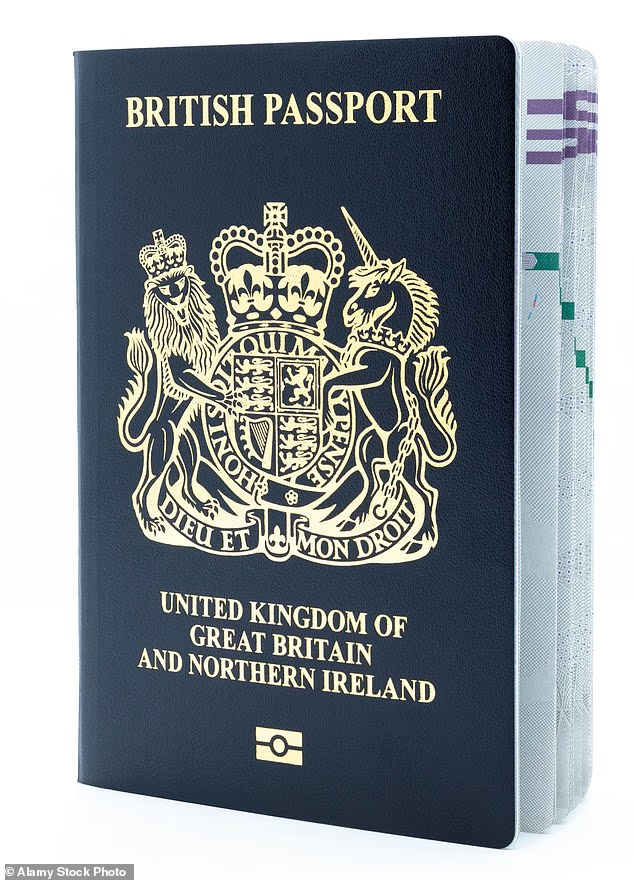
Passports purchased online are set to rise above £100 for the first time in the UK
Firstly, this year the cost of British passports has risen, with a standard online adult application increasing from £94.50 to £102, and a child’s from £61.50 to £66.50.
This means travellers applying for a new passport will pay nearly eight per cent more than in 2025.
While the increase may seem small, it can have a noticeable impact on the overall cost of a holiday, particularly for families.
Those opting for traditional postal applications face even steeper charges, with fees for adults rising from £107 to £115.50 and fees for children from £74 to £80.
For travellers in an urgent rush, the ‘premium’ one-day service is set for a substantial hike, jumping from £222 to £239.50.
The price hikes also extend to British citizens living abroad. Standard online applications from overseas will increase to £116.50 for adults (up from £108) and £75.50 for children (up from £70).
The Home Office defended the eight per cent increase, stating the adjustment is a move toward a ‘self-funding’ model.
A spokesperson noted the hike will allow the department to ‘move towards a system that meets its costs through those who use it,’ effectively shifting the financial burden away from the general taxpayer.
Air Passenger Duty hikes

Passengers travelling from UK airports will be hit with higher Air Passenger Duty rates
Air Passenger Duty is a UK tax charged on passengers flying from UK airports, with the amount varying depending on whether the flight is short or long-haul and the class of travel.
This year the charge has risen, with further increases planned for 2027, adding more pressure to the cost of flights and overall holiday prices.
The changes to APD came into play from April 1 and impacts flights departing from the UK.
The tax, which is paid by all passengers travelling on flights to and from UK airports, is typically included in ticket prices, with rates based on distance and class of travel.
Long-haul and short-haul routes will be affected at varying amounts, as well as domestic versus international flights.
Economy short-haul journeys have seen a £2 rate increase, according to Business Travel News Europe.
Meanwhile, long-haul flights have been hit with a 13 per cent rate increase.
Band A destinations, which are located closer to the UK and include spots in the EU and European Economic Area now pay an APD of £15, up from £13 for economy.
Higher classes have risen from £14 to £16, and the charge on private jets for these destinations has increased to £142, from £84.
For band B spots, which cover long-haul routes like America, the Maldives and Costa Rica, the APD for economy has risen from £90 to £102.
Private jets on these routes have been hit with a rise from £647 to £1,097, and higher classes have increased from £126 to £244.
Flights jetting off to destinations from the UK, including Australia, Japan, New Zealand, Vietnam and Thailand have seen an increase in the rate charge from £94 to £106, Euro News reports.
Meanwhile the APD on higher classes has risen from £224 to £253. As for private jets, the tax has increased by nearly 50 per cent – from £673 to £1,141.
The boss of the Business Travel Association previously raised concerns over the impact the rise could have on business travellers.
Clive Wratten described the increase in APD as a ‘major barrier to global connectivity’ and claimed the ‘UK already has the highest air departure tax in the world’.
He added: ‘Despite generating £4.195bn in 2024/25, the tax continues to rise across both domestic and international routes, increasing by 13 per cent and not aligned with inflation.
‘These increases are a hidden squeeze on travellers that often goes undiscussed – especially when APD doesn’t even offset the ever-rising and highly controversial airport drop-off fees.’
Rising tourist tax

Holidaymakers in Amsterdam are expected to pay 12.5 per cent extra on top of the cost of their hotel room
Tourist tax is not a new concept – but recent overtourism has led to a surge in measures to help reduce the volume of people headed to holiday hotspots, to support local housing pressures and promote sustainable tourism.
New countries have been introducing the measures for 2026 and existing countries are often increasing the costs – in some cases per person, per night.
For example, tourists heading to check out the vibrant nightlife, colourful architecture and culture of Amsterdam are expected to pay 12.5 per cent extra on top of the cost of their hotel room.
Called ‘Toeristenbelasting’, it’s one of the highest visitor fees in Europe, and was increased from seven per cent, plus €3 (£2.60) per person, in 2024.
Meanwhile, Bali has charged international tourists IDR 150,000 (£6.80) since February 2024.
The fee applies per person, rather than per person per night, and can be paid on or before arrival at the airport.
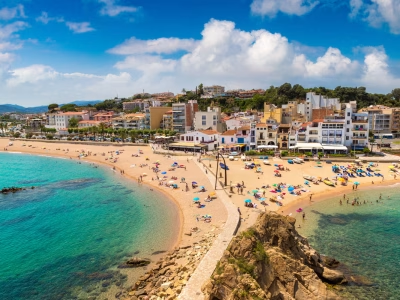
And tourists visiting Barcelona face nightly fees of up to €15 (£13) following a significant increase in the local tourist tax.
Under new regulations, the regional parliament of Catalonia has doubled the tax for holiday rental guests to a maximum of €12.50 (£10.90) per night, up from €6.25 (£5.45).
The rise comes ahead of a previously announced plan to ban all short‑term rental accommodation by 2028.
Hotel guests will soon be required to pay between €10 (£8.75) and €15 (£13) per night, up from €5 (£4.35) and €7.50 (£6.55), depending on the category, with the likelihood that guests will pay more at four and five-star hotels.
Jet fuel price rise

Airlines are starting to hike up their flight prices as jet fuel supplies dry up amid the ongoing conflict in the Middle East
Ongoing global uncertainty and recent constraints on fuel supply have pushed up the cost of jet fuel, contributing to rising flight prices.
With European jet fuel prices having seen significant increases recently, there is still uncertainty around how air fares may develop in the months ahead.
As a result, travellers who have not booked summer holidays in advance could face even higher costs this year.
Flight Centre’s booking data shows that eastbound fares to Asia and Australia have risen significantly by 29 per cent, while westbound routes to North America, the Caribbean and Mexico have risen just 5 per cent.
Plus, winter bookings for Australia are already up over 20 per cent, suggesting travellers are moving fast.
It follows mounting concerns surrounding Europe’s jet fuel supply.
International Energy Agency Executive Director Fatih Birol recently described it as ‘the largest energy crisis we have ever faced’ arising from the disruption of oil, gas and other essential supplies through the Strait of Hormuz.
‘In the past, there was a group called “Dire Straits”. It’s a dire strait now, and it is going to have major implications for the global economy,’ he said.
‘And the longer it goes, the worse it will be for the economic growth and inflation around the world.’
The consequences will mean ‘higher petrol (gasoline) prices, higher gas prices, high electricity prices’, he added.
If the Strait of Hormuz isn’t reopened, he continued: ‘I can tell you soon we will hear the news that some of the flights from city A to city B might be cancelled as a result of a lack of jet fuel.’
Just weeks ago, Ryanair chief Michael O’Leary warned that flights could be cancelled this summer due to the soaring cost of jet fuel.
He told ITV News: ‘We’re all facing an unknown scenario. And we are certainly looking at maybe having to cancel 5 per cent, 10 per cent of flights through May, June and July.’
Joe Beevis, general manager at Flight Centre, said: ‘The fuel crisis isn’t going away quickly and is having a direct impact on airfares. The good news for travellers is that not all destinations are equally affected.
‘For holidaymakers travelling in March, eastbound airfares past Europe, to destinations like Asia and Australia, increased by 29 per cent. A significant driver was reduced capacity from Middle East carriers, meaning a large number of travellers were competing for fewer seats.
‘However, for customers looking to holiday in or visit Canada, the USA, the Caribbean or Mexico, flight prices increased by just 5 per cent.
‘For anyone still thinking about summer, the best time to book is now. Locking in your price today removes the risk of any further increases.’
EU Border changes – ETIAS

British holidaymakers could face queues of hours when travelling this year
Coming soon, estimated to be introduced towards the end of 2026 will be ETIAS, European Travel Information and Authorisation System.
It is a similar concept to the US visa system, where passengers travelling to the EU for a short stay who are not a citizen of an EU or Schengen country will need an ETIAS for travel to 30 listed countries in Europe.
It will be free for children under 18 and people over 70 but €20 (£17.40) for all other passengers unless they are exempt – valid for three years, unless the travellers passport needs renewed.
Applications will be available online so holidaymakers need to be wary of fake sites selling ETIAS, especially now, given the process is not yet live.
According to the GOV.UK website: ‘EES is part of wider work the EU is doing to strengthen their border security. From Autumn 2026, the EU is expected to start operations of the new European Travel Information and Authorisation System (ETIAS).
‘No action is required from travellers at this point. The European Union will announce the specific date for the start of ETIAS before its launch. Any website selling ETIAS at this time is doing so fraudulently, and you should only apply on the official EU website when able to.’
Impact of large events

England fans feel ‘fleeced’ and ‘gouged’ by exorbitant train fares for this summer’s World Cup
World events tend to have a knock-on effect on travel prices, particularly in the countries hosting them, as demand for travel, accommodation and services increases.
With costs already rising across the board, major events this year such as the World Cup, Formula 1, and festivals like Tomorrowland and Primavera may contribute to higher travel expenses and make trips more expensive than in previous years.
Just last week, England fans felt ‘fleeced’ and ‘gouged’ by exorbitant train fares for this summer’s World Cup.
A 30-minute train journey to New Jersey’s MetLife Stadium will cost £111 for a return ($150) – an 11-fold increase on the regular price – from Penn Station in Manhattan.
And a 44-mile round trip from Boston’s central station to the Boston Stadium in Foxborough and back will cost £59.12 ($80) – four times the typical matchday fee.